Tuesday, April 30, 2013

Live Web Cams with Otters, Sharks, Penquins and More

Even if you live thousands of miles from the sea, there are live web cams that you can watch--like the entertaining sea otters at Monterey Bay Aquarium in California.  Thanks to a live web cam, a young man recently viewed the first ever video capture of an elephant seal slurping a hagfish at the sea's bottom.


Sea Otter Web Cam
Otters love to play with toys, lounge in ice buckets or just snooze. We feed ours four times a day, often putting the food in toys to stimulate the otters' natural behavior of pounding and working to get food out of shells.


Open Sea Web Cam

You'll see giant bluefin tuna power their way through the water, while hammerhead sharks, pelagic rays and giant green sea turtles swim just inches away.

The stunning one-million-gallon exhibit is home to one of the most diverse communities of open-ocean animals to be found in any aquarium.


Northern Elephant Seals
Watch northern elephant seals throughout the year when they haul out at the Piedras Blancas Rookery in California


Beluga Whale Cam
View the underwater world of the belugas and take an imaginary journey to the Canadian Arctic.


Jelly Cam
The jellies featured on this Vancouver Aquarium Jelly Cam are Japanese sea nettles. Jellies are invertebrates made up mostly of water. They have no heart, brain or bones


Hawaiian Monk Seal
An endangered seal rescued and now resides in this 
Hawaiian aquarium


Magellanic Penquin Cam
A temperate species, Magellanic Penguins are usually about two to two-and-a-half feet tall and weigh between six and fifteen pounds when fully grown.


Whale Shark Cam
 Whale sharks can grow to 15 meters (50 feet) and weigh as much as 40 tons by some estimates.


Monday, April 22, 2013

An Earth Day for the Sea


Here are 5 simple ways to help our oceans (from Blue Frontier Campaign):

1.  Grow a natural yard and garden
2.   Don’t waste water
3.   Visit an Aquarium
4.   Join in a Beach Cleanup
5.   Use less plastic

To find 45 other ways to help our ocean smile, become a Seaweed Rebel!


Thursday, April 4, 2013

Humbolt Squid Crittercam Reveals A Fast, Strong, and Flashing Beast


Scientists attached a "crittercam" to  Humbolt squid and said, WOW after watching what happens under the sea with these remarkable creatures.

Here are some amazing new facts explained by Science News:

 Humbolt squid:
  •  Are capable of amazing bursts of speed, up to nearly 45 mph (72 km/h)--the same as the fastest ocean fish
  •  They "talk" to each other by changing their body color--like flashing Christmas tree lights
  •  They hunt in big organized groups
  •  Smaller squid tend keep their distance from the bigger ones 
  • Their bite is one of the world's most powerful--one squid shattered a Kevlar plate (20 times stronger than steel) with its beak. A crocodile may be the only animal with a stronger bite.
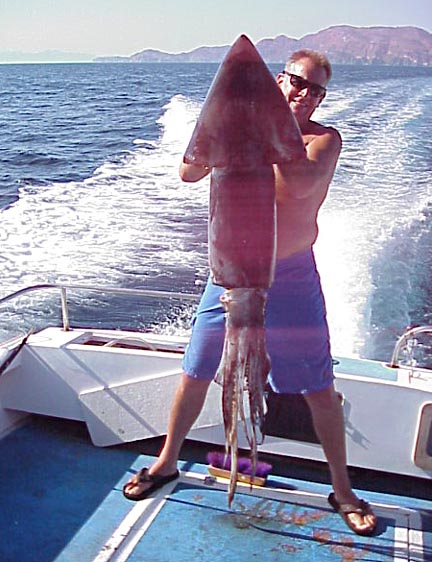
Humboldt Squid picture 2Humboldt squid can grow to more than 6 feet (2 meters) in length and 100 pounds (45 kilograms) in weight. They have razor-sharp beaks and toothed suckers.  They usually feed on small fish and plankton that are no more than a few inches in length.

Tuesday, April 2, 2013

Dance With the Sea Lions

Let's boogie with this California Sea Lion!


This is Ronan--the first non-human mammal to keep a beat.
Ronan is a California Sea Lion.
Wouldn't it be fun to have a homework assignment that says, "Teach sea lion to boogie."

Monday, March 18, 2013

Divers Free Whale From Fishing Line

Last week, divers near the Hawaiian Islands Humpback Whale National Marine Sanctuary in Maui  discovered a humpback whale caught in fishing rope.
Buoys and line
Rope & Buoys on Humpback Whale Tail

It took several efforts to remove more  than 200 feet (61 m) of line and two buoys from around the whale.


Under the sea
Fishing Rope Caught on Humpback Whale


These gentle giants swim 3,000 miles from Alaska to the warmer waters of Hawaii in the winter.  They rest and give birth to their calves--usually from January thru April.


Photos and story courtesy of NOAA.

Young Paddleboarders Clean Florida Waterway

Photo from SUP  Magazine
A waterway in Florida often clogs with trash.  The trash lands in the waterway after a rain storm, and then the trash makes its way to the ocean.  

Recently, young volunteers on paddleboards swept the waterway clean.  They used a special paddle with a net that captures the trash, and then they put the trash into a trash can attached to their paddleboard.

Paddleboarders have collected more that 2200 pounds of trash--that never reached our beautiful seas.

 Sea Stars all around!

Source: SUP Magazine