Showing posts with label Entanglement. Show all posts

Thursday, September 11, 2014

Orca Pod Helps Entangled Orca Breathe

Dian is a special orca (killer whale).  She’s a 35-year-old wild orca that lives in New Zealand waters.  On Monday, Sept. 8, 2014, Dian, named for the famous gorilla researcher, Dian Fossey, was found struggling.
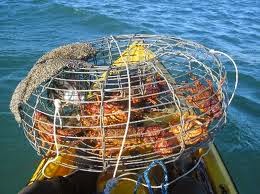
Cray/Crab Pot.
Dian was entangled in a rope which was attached to a heavy cray/crab pot resting on the ocean floor. It was too heavy for Dian to constantly lift and reach the surface to breath. This orca was in big trouble from entanglement.
A disentanglement team rushed to rescue the orca and discovered the most amazing thing.  Dian’s pod, including a calf, were lifting her to the surface so that she could breathe! 
Dian entangled with her pod pushing her up for air. Photo from
Orca Research Trust


Dian was rescued and is okay.  She swims free of ropes and cray pots today. 
This story comes from the Orca Research Trust in New Zealand, and Dr. Ingrid Visser, who has studied the orcas in New Zealand since 1992.


Thursday, November 14, 2013

Search on for Young Whale Caught in Plastic Line

Imagine taking a whale watch boat and, by chance, you see a whale with  a large green plastic line wrapped around its tail.  What would you do?

Of course, you would tell a grown up right away, so that someone could help that entangled whale.

Last Monday, on a whale watching cruise in Hawaii, that's exactly what happened. Officials are trying to save the young humpback whale entangled in a large green plastic line wrapped around its tail.

Humpback whale mother and calf. Photo by silke@silkephoto.com.au
Humpback whales visit Hawaii's warmer waters every year. But even in Hawaii's beautiful blue waters, our plastic trash still causes trouble for all marine life. 

Fortunately, there is the  Hawaiian Islands Entanglement Response Network that safely responds to marine animals in distress.

You and your family can learn more about whales on this page of whale trivia.


Tuesday, July 16, 2013

Fisherman Dives and Rescues Entangled Right Whale

An endangered and rare northern right whale off the coast of Virginia Beach is now free thanks to a brave local fisherman. 
Earlier this week, two fishermen saw the whale struggle in fishing rope wrapped around its flippers.  They decided that they could possibly save the whale by diving in a cutting the fishing ropes.

Northern Right Whale--a Baleen Whale
"It was almost like a submarine coming at me,"  said  the diver. "It was kind of scary at first, but it was real trippy ... as soon the whale passed me and I was parallel to its face and its eye, it kind of stopped and the gave me a little window to get down there and make the cut."

Only about 350 North American right whales exist in the wild, according to the Defenders of Wildlife. 

Monday, March 18, 2013

Divers Free Whale From Fishing Line

Last week, divers near the Hawaiian Islands Humpback Whale National Marine Sanctuary in Maui  discovered a humpback whale caught in fishing rope.
Buoys and line
Rope & Buoys on Humpback Whale Tail

It took several efforts to remove more  than 200 feet (61 m) of line and two buoys from around the whale.


Under the sea
Fishing Rope Caught on Humpback Whale


These gentle giants swim 3,000 miles from Alaska to the warmer waters of Hawaii in the winter.  They rest and give birth to their calves--usually from January thru April.


Photos and story courtesy of NOAA.

Sunday, March 3, 2013

Entangled Sea Lions Rescued

Here's that big word again: Entanglement.  This time we can change the word to: Disentangled--or rescued.

Two sea lions near Monterey, Ca. took a dive in the salty water, maybe hunting for food, and were caught  (entangled) in fishing line that wrapped around each sea lion's neck and head.  Ouch! 

A special team of rescuers from the Marine Mammal Center near San Francisco, including a specialty veterinarian, found each of the entangled sea lions, and made a daring rescue.


Both sea lions had the fishing line successfully removed.  

Remember when you go fishing, even in your local lake, stream or river, to dispose of old fishing line in a proper way.  Many popular fishing locations have tubes to collect and recycle your fishing lines.  The sea lions will thank you!

Friday, January 25, 2013

Dolphin Ask Divers For Help

This video is kind of long, but it is an amazing video because:

1) The manta rays are gorgeous;
2) The dolphin asks for the attention of the divers;
3) The divers discover that the dolphin  needs help.  It is entangled with fishing line.  (Fishing line that someone might have carelessly thrown into the ocean.);
4) How the divers and the dolphin work together to cut and remove the fishing line from the dolphin's fin.

Fishing line tossed into creeks, rivers, lakes and oceans is dangerous to the creatures that live there.  Birds also get entangled with fishing line. Fishhooks are also dangerous, as seen in the video above.


When you go fishing watch for a fishing line recycling container like the one pictured here.  

This way you will be a friend of fish, mammals, sea turtles, and birds.

What should you do if you see a marine mammal or sea turtle entangled?

  • Keep your distance.  Injured, sick or entangled animals can be unpredictable and dangerous.

  • Please call the NOAA Marine Mammal Hotline: 1-888-256-9840
  
What are your thoughts about this video?  You can comment below.


Saturday, November 3, 2012

Entanglement. A Big Word.


Entanglement.  That’s a big word.  It’s also a big job to rescue animals from the sea that are entangled.


A whale entangled in fishing net
Entanglement means that a whale, a dolphin or any other kind of sea life has been caught and is tangled in old fishing lines, fish nets, ropes, and plastic trash floating in the oceans.  Most entangled mammals die if entangled because they need to surface for air.  If their fins, flippers or tails are wrapped up in old fish nets, the mammal weakens and finds it hard to swim, dive, swim, dive—how many mammals eat and breathe.

A sea lion with a plastic bag around its neck
Sometimes seals and dolphins swim through plastic that is used to wrap boxes. The plastic ring gets caught around their necks.  As the animal grows, the plastic ring digs deeper and deeper into their neck.  Many die from choking.

There are people around the world who work to save marine mammals that are entangled.

What can you do to help entangled marine mammals? 

  •        Learn more about marine mammals. Many Cub Scouts, Brownies, Girl Scouts and Boy Scouts clubs offer marine mammal badges.
  •       Recycle plastics.  Better yet, reduce plastic use.
  •       Say no to plastic bags. Bring your own reusable bag for shopping.
  •       Volunteer with your family, friends, club or church group to clean up creeks, rivers or beaches where you live.
  •        If you see a seal, dolphin or other marine life on the beach, ask an adult to call for help.  Be sure to not touch the animal.  Keep dogs away from the animal.